
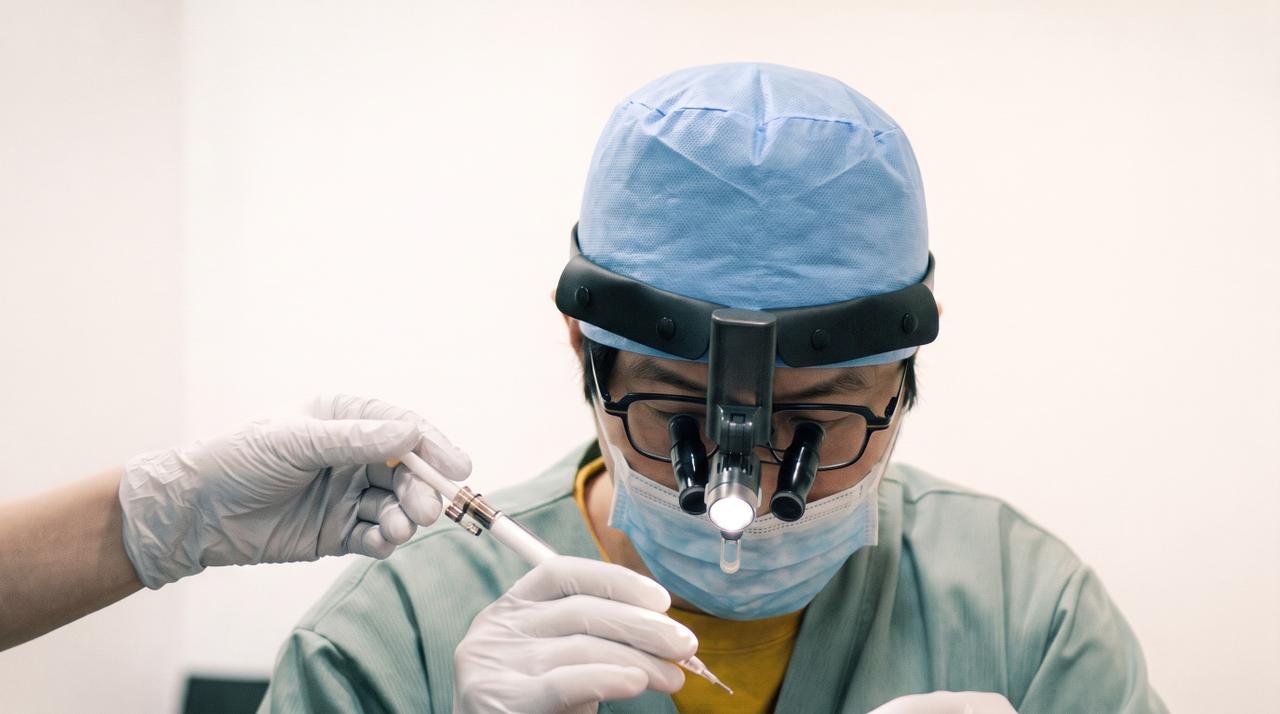
We design even the direction each hair grows
We read the shape of the head, the texture, and the balance of the face, then design the hairline to match.
Honesty comes before skill
Five things Jarada does not compromise on in hair transplantation.
One pair of hands, start to finish
When several people share the implanting, angle and direction drift. One person implants the hairline he designed, down to the last graft.
We account for every 0.1%
We aim for a follicle loss rate under 2%, catching errors during surgery and briefing you on the data.
No scars, no lingering pain
We stay with the non-incisional method to get the best result and a fast return to daily life, without the scar and pain of an incision.
You have to comb it against the grain
We comb the hair against the grain from the front, both sides, and the back, and show you the density on video.
We design for five and ten years out
We place follicles while preserving donor density, and follow recovery for more than a year after surgery.
The design changes with the type of hair loss

Mega-session transplant
Transplanting 2,500 grafts or more in a single session. We preserve the donor area and distribute follicles with future progression in mind.

Reconstruction and revision
We redesign and rebuild scars from earlier surgery, unnatural hairlines, and areas where the graft did not take.

Crown and front density
We leave the hairline as it is and fill in the crown and the front. We place the grafts where they are needed so the back of the head is not spent carelessly.

Female hairline
We narrow a hairline that looks too wide and fill in the part. The design is drawn to look natural, with an approach that reduces the burden of shaving.

High-density male hairline
We rebuild a receding M-shaped hairline at high density. The line is designed to suit the face and the age, so it looks natural.

Body-hair grafting
When the donor area at the back is not enough, we also use hair from other parts of the body. Beard hair suits the sideburns especially well, because its texture blends with the hair already there.
From consultation to regrowth
What comes before and after surgery takes longer than the day itself. It helps to know the order in advance.
- 1
Consultation
We look at the scalp, then design
Hairspray or wax makes the scalp hard to assess, so please come without applying them.
- 2
Pre-Surgical Scalp Care
One to two weeks before surgery
A blood test is required before surgery, so scalp care comes first. It covers inflammation control, blood work, and pre- and post-operative prescriptions. If you have grey hair, please colour it beforehand.
- 3
Surgery Day
One surgeon, start to finish
We trim the donor area short and harvest follicles without an incision. One doctor implants the hairline he designed, down to the last graft.
- 4
Scab Removal
Scabs come off in week two
We remove them at the clinic 12 to 14 days after surgery. We soften the scabs thoroughly with lukewarm water, then push them off gently with the pads of the fingers.
- 5
Shock Loss
When transplanted hair falls out
Between days 7 and 10 hairs come away with the scabs, and by one month most of the transplanted hair, along with some surrounding native hair, falls out too. This is a normal course known as shock loss.
- 6
Regrowth
Growth returns from month two
The hair that fell out starts growing again from two months after surgery. We follow recovery, including the donor area, for more than a year.
How to care for it afterwards
The two weeks right after surgery decide how well the grafts take.
01 Leave it alone until the scabs come off
It is best to leave the recipient area untouched until the scabs are removed.
02 Moisturise with saline
Once you have finished the graft spray, moisturise with sterile saline until the scabs are removed. Spraying and letting it dry, over and over, makes scab removal less irritating.
03 Avoid alcohol and cigarettes
Heavy drinking and smoking can cause folliculitis or interfere with graft survival. Please also hold off on physically demanding activity.
04 If inflammation appears
Apply a small amount of Bearoban ointment. If it feels like it is getting worse, contact the clinic.
The questions asked most before surgery
We gathered the most-viewed questions from the comments on our YouTube channel, Jarada TV.
I have lost a lot of hair. Do I have to have surgery?
Hair loss is not caused by genetics alone; stress and lowered immunity play a part too, and treatment has to change accordingly. Rather than pushing surgery on everyone, Jarada first analyses the state of the hair loss genes.
If your hair has only thinned, a systematic programme of medication and nutrition can be enough to reverse the cycle, and where the roots are already gone we fill in density efficiently with methods such as no-shave transplantation.
Does non-incisional transplantation have side effects? I worry about scars and pain.
Saying there is 100% no pain or scarring in any surgery would perhaps not be honest. But Jarada works doggedly, out of sight, to bring that possibility close to zero, striving to keep intervention on the scalp to a minimum while harvesting and implanting follicles.
Instead of a slit of the usual size, we use an ultra-fine slit of 0.8 to 0.9mm, physically reducing the wound area itself. It is a difference of only 0.1mm, but that fine margin is the decisive key to dramatically lowering post-operative pain and erasing the trace of a scar.
I have to get back to normal life right away. Do I really have to shave?
Many people hesitate over surgery because shaving feels like too much. But surgery is not only possible with a shave. For harvesting at the back of the head, the pre-cut no-shave technique lets us select and trim only the follicles to be taken, leaving the surrounding hair as it is.
So there is little visible change after surgery and little disruption to daily life. In the recipient area too, we implant precisely between the existing hairs, leaving them in place, so Jarada raises density naturally while preserving the hair you already have.
Different clinics recommend different graft numbers. Why is that?
There is no absolute right answer on density, and simply implanting as many as possible is not the point. The amount needed changes with each person's hair thickness and expectations.
People with fine hair inevitably need more grafts to look full, while for those who want an efficient result with a lower hairline we propose a design that gives high satisfaction with fewer grafts. In the end what matters is finding the delicate meeting point between the patient's idea of "enough" and the doctor's judgement of "optimal", without wasting the precious donor resource at the back of the head.
I want it as dense as my original hair. Is maximising density always better?
Technically it is quite possible to achieve something close to the original density.
But forcing high density uses up the precious donor resource at the back of the head. Jarada aims for sustainable transplantation: securing a density you are happy with today while cleverly leaving donor hair in reserve against any future progression of hair loss.
They say my donor supply is short. Is there another way?
There can be limits with the traditional approach, but Jarada also looks at resources beyond scalp hair. Beard hair and body hair from other areas make an excellent alternative for sideburns or for reinforcing density.
Areas such as the sideburns have the added advantage that the particular texture of body hair blends better with the existing hair. Placing a limited resource in the most artful way is where Jarada's craft lies.
Why harvest and implant in several rounds instead of all at once? Doesn't that make surgery longer?
It is to minimise the time follicles spend outside the body (OBT) and raise the survival rate. The shorter a follicle stays outside, the healthier its condition when implanted.
For large sessions, harvesting a portion and implanting it straight away, over and over, maximises follicle freshness rather than taking everything at once. Of course the numbers have to be adjusted for the fatigue of both patient and staff, but we design the surgery in whatever way gives each follicle the best possible condition when it goes in.
Does transplanted hair never fall out? What if my original hair thins later?
The donor hair used for transplantation keeps its property of being unaffected by hair loss genes, so it grows permanently where it is placed.
However, the surrounding native hair that was not transplanted can continue to thin. So Jarada does not stop at filling today's gaps; we combine medication that protects your existing hair and design a long-term roadmap that keeps overall fullness for years.
It has been about a week since my transplant. Can I wear a hat and play tennis now?
From day 7 after surgery you can wear a hat and exercise, but for a safer recovery we suggest starting after 10 to 14 days. Putting a hat on and taking it off while sweating can irritate the recipient area, so it is better to allow a little more time until the grafts have fully taken.
What matters most is keeping the scalp clean after exercise, and from around day 10 you can enjoy everyday activity with far greater peace of mind.
It has been about 10 days since surgery and there are no scabs at all. Have the grafts failed?
If you see no scabs after surgery, that is a positive sign that care is going very well. Washing and drying the scalp diligently can make scabs come away early, which is one of the most ideal recovery situations.
That said, in the early days you must avoid any external irritation or scratching that could interfere with graft survival, and if you see signs of inflammation such as folliculitis, it is important to get help from the clinic right away and manage it properly.
My forehead and face swelled badly after surgery. Did something go wrong?
Swelling after surgery is a natural phenomenon caused by the anaesthetic used during the operation moving downwards. It has no effect at all on the result or the graft survival rate, so you can rest easy.
That said, larger sessions use more anaesthetic and swelling can be more pronounced, which is something experience and know-how can moderate. Jarada also provides aftercare such as prescriptions to ease swelling, helping you return to daily life sooner.
Why do before-and-after videos make a point of combing the hair in every direction?
Because combing is the surest way to check the real density that shows how complete the surgery is. Combing not only from the front but against the grain, where the scalp shows through most, we show without editing how naturally the transplanted and native hair join and whether it is filled in without gaps. That is Jarada's confidence.
It lets you see for yourself the difference a high-density result makes from any angle.

We have to see the scalp to know
How many grafts you need and which method suits you is something we tell you after seeing it in person. Book a visit, or ask our AI first.